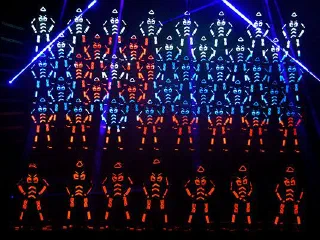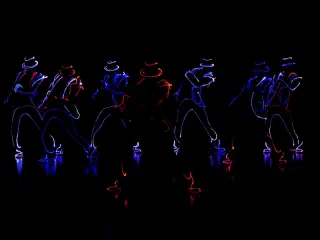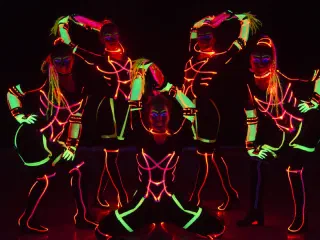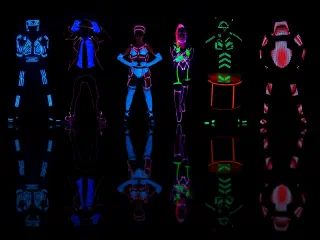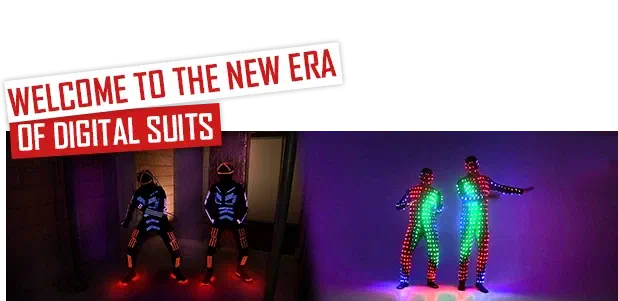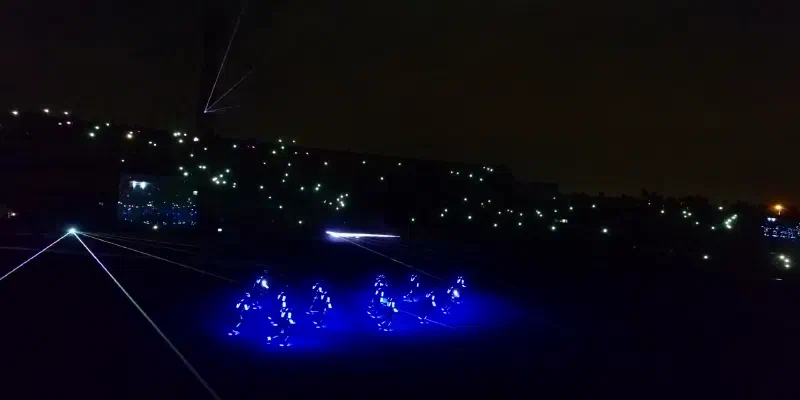
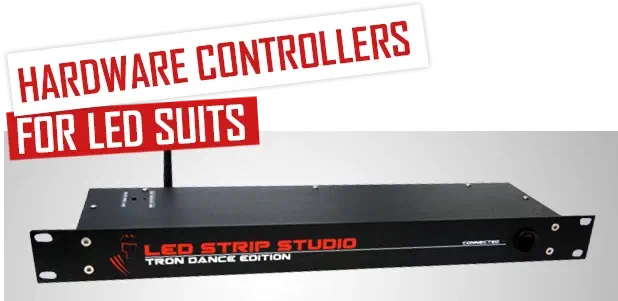
Tron Dance shows hardware controllers usually use DMX protocol to be controlled. In this article we’ll show you all required hardware parts you need to produce Tron Dance System.
DMX Protocol
Link to this section: DMX ProtocolUsually the Tron Dance shows are controlled using wireless DMX. If you don’t know, what is DMX, it’s protocol which controls almost all lights at events, concerts or parties. Here is a short tutorial about DMX protocol:
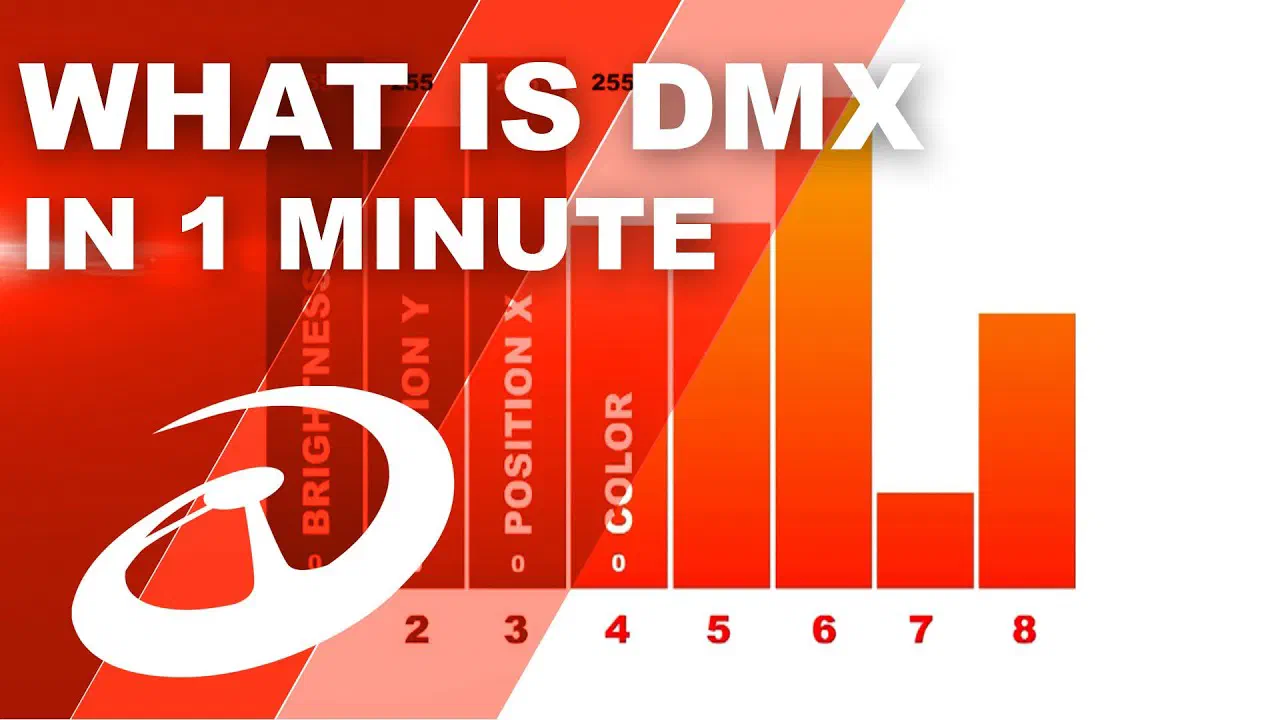
The DMX protocol is really simple – it’s just total of 512 channels (numbers) sent 40x per second. Each channel contains value 0 to 255. And every light used in the show uses some portion of the channels. E.g. if we use LED strips, they use 3 channels for controlling Red, Green and Blue color. The first LED strip can use channels 1, 2 and 3. Then second LED strip uses channels 4, 5, 6 and so on.
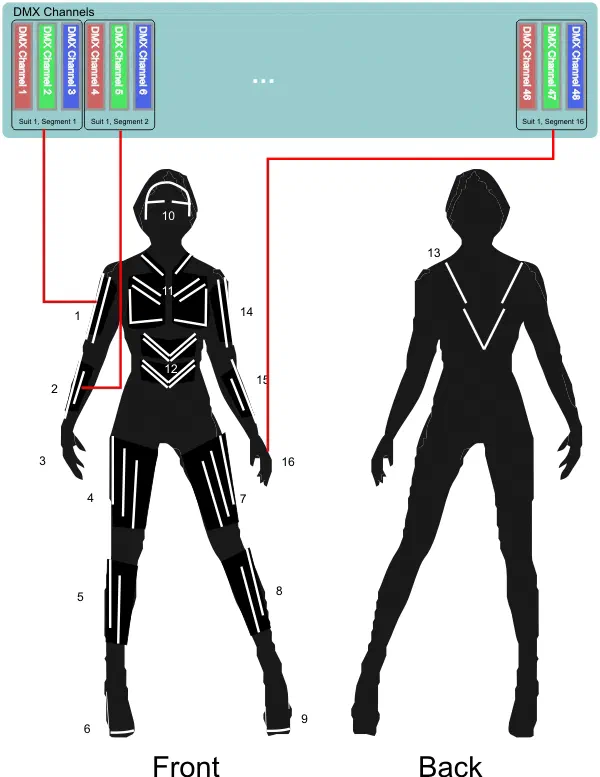
The DMX protocol channels are used for the LED costumes too. Each segment of the LED costume uses 3 DMX channels to set Red, Green and Blue intensity (not necessary in this order). Every dancer wears LED suit with e.g. 16 separate segments. It means, one LED suit needs total of 16 * 3 = 48 DMX channels to be controlled:
Wireless DMX
Link to this section: Wireless DMXThe DMX protocol is usually transmitted over DMX cables. But since the dancers have to move, you have to control them wirelessly. There are several companies, which produce wireless DMX controllers.
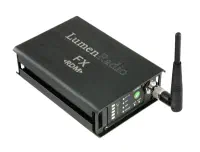
You need at least one wireless DMX transmitter and several DMX receivers for each dancer. You can buy the receivers and transmitters almost anywhere (usually it’s the same device, which can be configured as DMX receiver or transmitter). There are even some small Chinese boards you can buy very cheap to transfer. But in the environments like TV studios, where lot of wireless signals are used, they might not work properly. That’s why we’ve used standard controllers from LumenRadio company.
LED Drivers
Link to this section: LED DriversThe wireless DMX is used only to control the LED suits. You’ll also need some drivers to power up the LED suits. You could use some standard analog drivers for LED strips. The problem is, standard LED DMX drivers are quite huge and heavy. It’s not very practical to attach them to dancer’s body.
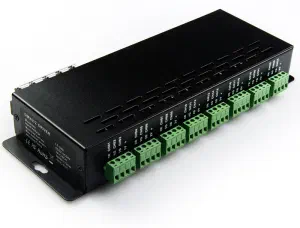
And finally you need some batteries for the LED suits, which will power the DMX receivers and drivers. Of course it’s better if the batteries are rechargeable – to change the batteries after every performance is really not practical. Also it’s important to find more information about the battery – it has to be able to discharge fast. Otherwise it’ll be probably destroyed pretty soon.
LED Strip Studio LED Suit Receiver
Link to this section: LED Strip Studio LED Suit ReceiverWe did lot of installations using LED strips in the past using the DMX drivers. We knew, the standard LED drivers and standard wireless DMX receivers are not practical for LED suits. That’s why we’ve produced specialized LED Suit Receiver, which integrates wireless DMX receiver, analog LED driver into one small box. This box is attached to dancer’s back and doesn’t prevent any movement.
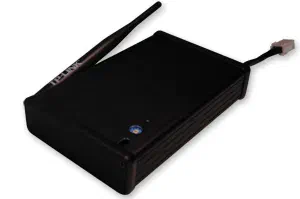
There are also special fuses built-in – in case the dancer destroy some part of the LED costume, the remaining parts won’t stop work.
The Suit Receiver allows you to control up to 16 separate outputs for suit parts, each RGB color. You can install up to 1m of LED strip on one output, which gives you lot of design options.
There is also special feature, which allows you to lower the maximal brightness of the LEDs. But this is so-called hardware brightness – it means, you still have 256 levels of gray if you lower the brightness to e.g. 10%. By standard LED drivers you have only total of 256 levels – and if you lower the brightness to 10%, you’ll have only 25 levels for each color. This is important especially for TV shows – you can’t use full 100% brightness of LED strips (usually it’s only about 2 -5%). Anyway to make it short – the colors fades are just nicer using our LED Suit Receivers…
What’s next? Software of course…
Link to this section: What’s next? Software of course…This part was more technical, but we’re talking about the hardware – not much fun there. In the following part we’ll talk about the most important part of Tron Dance system – the control software.