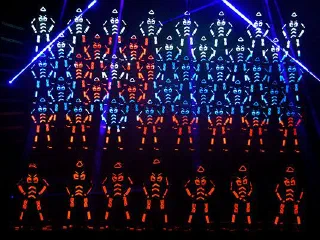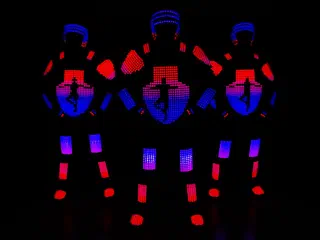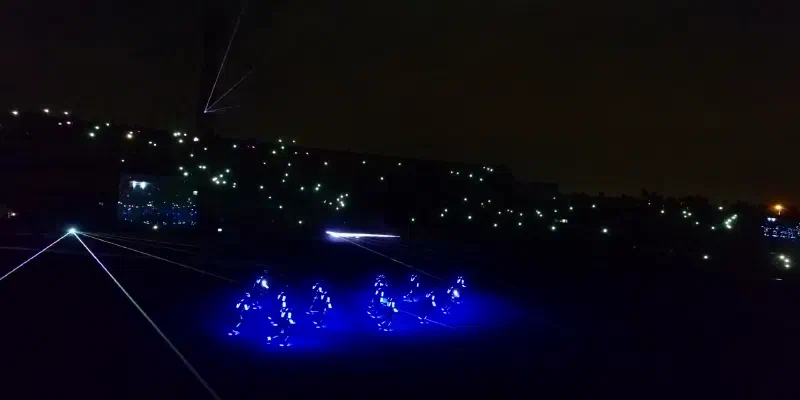

This is the show we did for Slovak Music Awards:
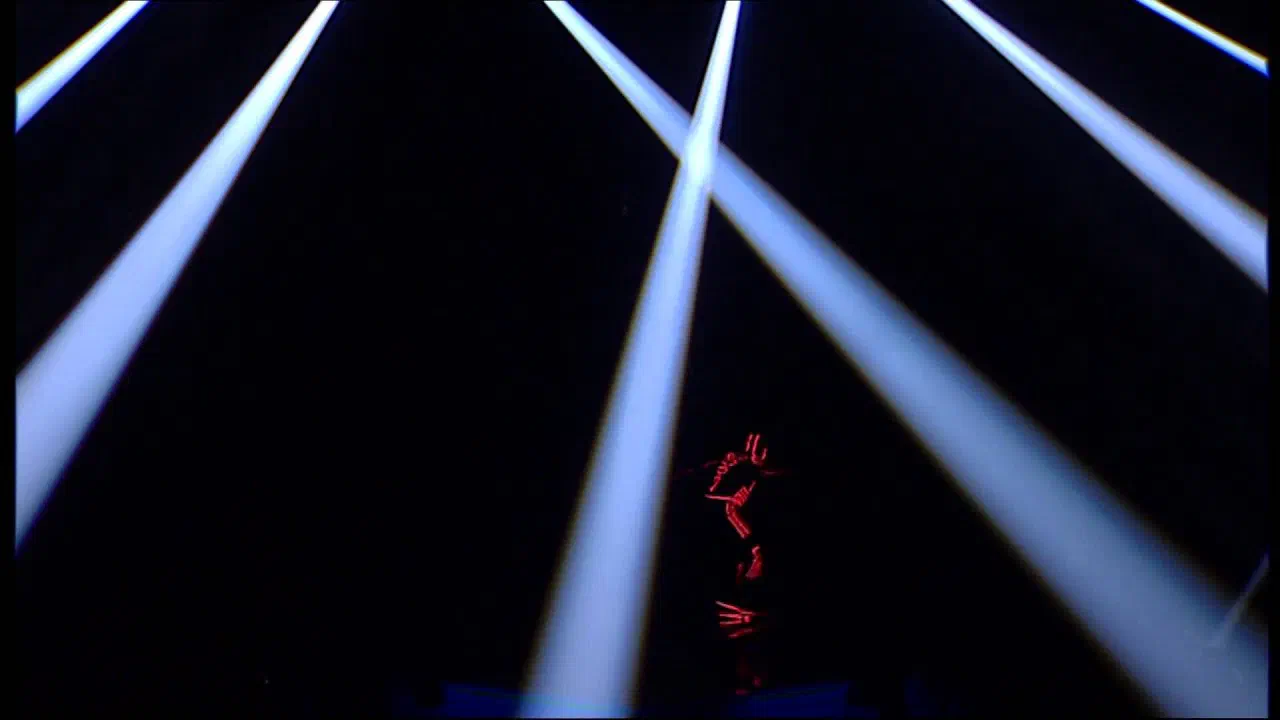
As I told you in my last post, it was not so bad in the end. But we made several mistakes I’d like to share.
The first and most important problem was the timing. We simply rushed too much. The complete system with the suit production was developed in one month. There was not enough time to develop the system. I see it now, but of course I wasn’t able to see that back then. I really thought it would work out somehow. Whenever you develop something new and more complicated than your usual daily job – beware of the unknown. It was too much of “unknown” for us there.
LED strips
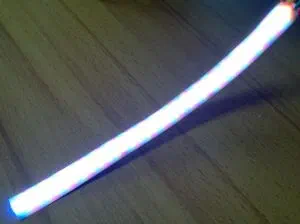
Link to this section: LED stripsThe most important technical problem was the strip itself. We wanted to produce ultimate LED strip 🙂 … But while doing it, we completely forgot what we’ve learnt about the LED strips in last 5 years. It’s one of the most sensitive technology widely used in events. It’s perfectly reliable if you install it on a rigid surface. But it’s definitely not a good idea to let it bend all the time.
Stitching
Link to this section: StitchingThe idea of attaching the strip directly onto the suit was simply a bad idea. And it was even worse with the new “ultimate” LED strip. The 384 LEDs per meters looks great. But the strip was simply too sensitive to be installed on the suit where it’s always bending in different directions. Not to mention, the tailors could not stitch the LED strip without crossing it sometimes.
Electronics
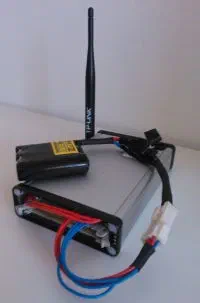
Link to this section: ElectronicsThe third huge mistake we did was the electronics. LED strips always require a lot of power and if you forget some detail in the wiring it’s really easy to burn the processor and the remaining electronic components inside the LED Suit Receiver. Although we had tested the hardware in our lab new issues started appearing after we installed it on dancers’ body. We also found out the aerial was good when it sat on our table, but not when it was close to dancer’s body.
Wiring
Link to this section: WiringAnother problem was the wiring. The wires were just not long enough. You probably ask how could we have done such a stupid mistake. Well, sometimes I ask the same question … The main part of the problem were the arms and the legs. The cables were long enough while stretched in stable position. But when the dancers started to move they weren’t enough anymore. Maybe if the dancers just stood still, it would have worked … but then again the Tron Stand Show doesn’t sound very appealing 🙂 …
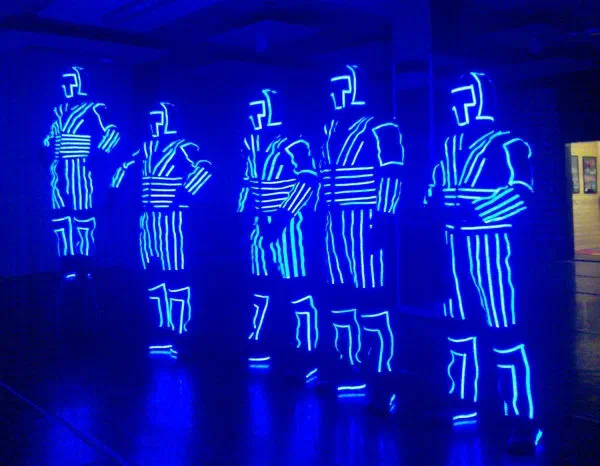
We had a lot of sad days after the show. We’ve tried to fix most of the system problems and we were quite successful. And that success led us, at least according to the number of YouTube views, to the most successful Tron Dance performance we have ever done …